
Spider veins and sclerotherapy
Questions in this group
- What is sclerotherapy?
- How long until sclerotherapy patients feel better?
- Is laser treatment better than sclerotherapy?
- When should spider veins get checked?
- How successful is sclerotherapy?
- Which benefits and risks come with sclerotherapy?
- What are spider veins?
- Can spider veins be prevented?
- What happens during sclerotherapy?
- What are reticular veins?
- What makes sclerotherapy easier to go through?
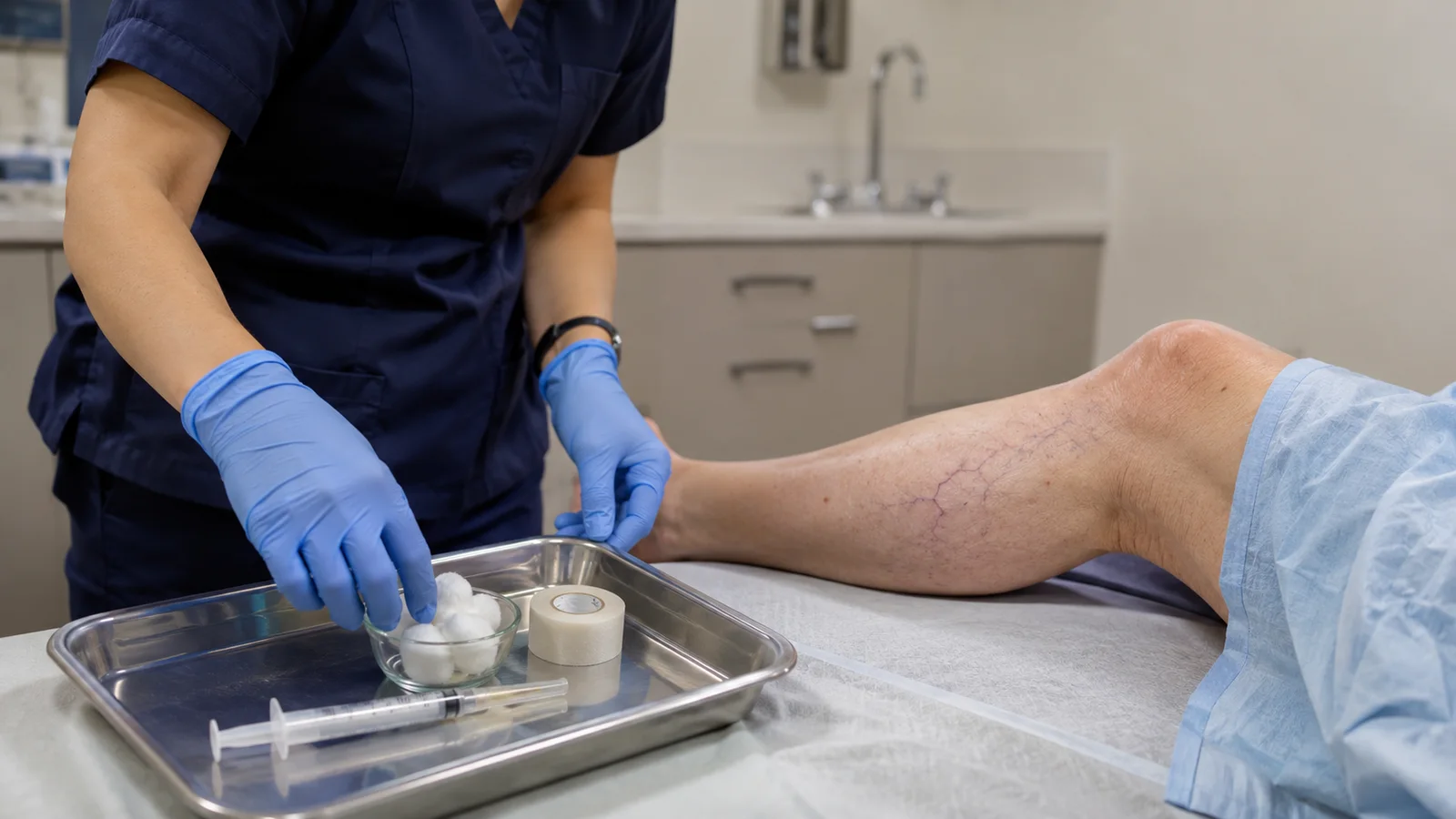
Fine red, blue or purple lines on the legs bring readers to this cluster. Eleven questions follow, grouped so the least worrying ones come first.
Recognizing spider veins
my.clevelandclinic.org gives the definition: "Spider veins are damaged capillaries, venules and arterioles (small blood vessels) that look red, blue or purple." The same source adds a point worth keeping in view: "Spider veins don’t necessarily need treatment. But treatments are available if you don’t like how they look."
- What are spider veins?
- What are reticular veins?
- Can spider veins be prevented?
- When should spider veins get checked?
How sclerotherapy works
These questions walk through the procedure in the order a patient meets it.
- What is sclerotherapy?
- What happens during sclerotherapy?
- What makes sclerotherapy easier to go through?
- How long until sclerotherapy patients feel better?
Weighing the options
Before agreeing to any work, these are the questions worth asking.
- How successful is sclerotherapy?
- Which benefits and risks come with sclerotherapy?
- Is laser treatment better than sclerotherapy?
Two Cleveland Clinic guides to read alongside
Two pages from my.clevelandclinic.org sit next to this topic: a venous disease overview and a varicose veins guide.
A note for readers around Mokena
A clinician who has examined your legs can tell you whether yours need treatment, so ask that question before you pay for one.